The Apartment Job (2026) Review: A Great Premise That Slowly Loses Its Way
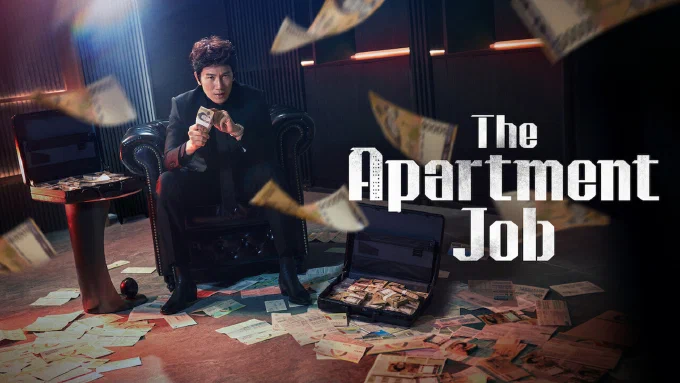
The Apartment Job is one of those dramas where I found myself thinking, “This could have been really good.”
The premise is genuinely unusual. A former gangster gets involved in a scheme to steal an enormous apartment reserve fund, only to become increasingly involved in the problems of the residents he originally intended to exploit. What begins as a potential heist gradually turns into a strange combination of mystery, comedy, crime drama, apartment politics, and found family.
That sounds like a lot, but surprisingly, the drama’s biggest problem isn’t that it tries to combine too many genres. The problem is that the strongest ideas are introduced much better than they are developed.
I enjoyed the beginning considerably more than the later episodes. After around episode 4, the drama started moving into territory that felt much more ordinary and predictable, and my interest dropped noticeably.
A genuinely strong beginning
The first episodes are probably the best advertisement for The Apartment Job.
The idea of a group of criminals essentially infiltrating an enormous apartment complex is funny on its own, but the drama adds another layer by giving them a fake-family setup. The characters have different motivations and personalities, and watching them try to maintain their ridiculous cover while dealing with residents creates plenty of entertaining situations.
More importantly, the story initially makes you wonder where it is going.
Is this actually going to be a heist?
Will the characters betray one another?
How much of the apartment’s corruption is connected to the larger mystery?
Will the protagonist actually go through with his original plan?
That uncertainty gives the early episodes momentum.
I also liked the way the story gradually shifted the protagonist’s priorities. He initially has a very straightforward financial motivation, but once he starts becoming involved with the people around him, the apartment stops being merely a target.
That is where the found-family element becomes the emotional core of the drama.
The found family works better than the heist
For me, the fake family becoming something much closer to a real family was one of the best parts of The Apartment Job.
The characters aren’t necessarily people you would expect to become close, which makes their gradual attachment to each other more entertaining. The comedy works particularly well when it comes from their personalities and relationships rather than from the plot simply forcing another joke into a serious scene.
The supporting cast also deserves a lot of credit here.
There are several characters who could easily have become annoying, but the actors give them enough personality to make the apartment community entertaining to watch. Some of the supporting characters actually ended up leaving a stronger impression on me than parts of the main mystery.
Ji Sung is also very good as Park Hae-gang. The role requires him to move between intimidating gangster, reluctant community representative, comedic character and increasingly caring member of the group, and he handles those shifts well.
Ha Yoon-kyung’s Kang Ha-ri is another important part of the group’s chemistry. Their interactions are fun precisely because they don’t behave like a conventional romantic couple.
And that leads to one of my frustrations with the drama.
The romance is teased more than it is developed
The chemistry between Hae-gang and Ha-ri is obvious.
I enjoyed their interactions, and I understand why viewers became interested in the possibility of them becoming a couple. The drama repeatedly gives us little moments that suggest there might eventually be something more between them.
But The Apartment Job never really commits to it.
That’s perfectly fine if the intention is for romance to remain a minor subplot. This isn’t a romance drama, and I wouldn’t recommend watching it primarily for the relationship between the leads.
The problem is the way the drama keeps hinting at something that it doesn’t meaningfully resolve.
The “three years later” section made this especially strange for me. After all that chemistry and teasing, suddenly seeing the characters behaving almost like distant friends left me wondering what the earlier romantic setup was supposed to accomplish.
I would actually have preferred the drama to make a clear decision: either develop their relationship properly or simply let their relationship remain an entertaining partnership.
The apartment setting had enormous potential
This is probably my biggest criticism.
The apartment complex is a fantastic setting for a drama like this. It could have been a miniature society containing its own politics, class divisions, resident disputes, financial problems, construction issues, corruption, competing interests and interpersonal conflicts.
And the drama does introduce many of these ideas.
But it often feels like it introduces them only long enough to use them for the next plot development.
That makes the apartment feel smaller than it should.
We’re repeatedly told that we’re dealing with a huge residential complex, yet the story often revolves around the same relatively small group of people. The setting doesn’t always feel like the enormous community that the premise promises.
This is especially noticeable because the drama occasionally gives us glimpses of how interesting this world could have been.
The resident politics are entertaining.
The corruption surrounding the reserve funds is interesting.
The conflict between different interests within the complex has potential.
The idea of people being afraid that exposing corruption could hurt their property values is particularly believable.
But instead of turning those elements into a deeper social portrait, the story frequently uses them as stepping stones toward the next mystery or confrontation.
That left me feeling that the drama was constantly showing me the outline of a much better version of itself.
The biggest drop came after episode 4
This is where my experience differs quite a bit from the people who found the drama consistently entertaining.
The beginning had a sense of discovery. Once the basic setup was established, however, I felt the story becoming increasingly normal.
The characters were still likable, but the plot became less exciting.
Some developments started feeling predictable, and there were moments when characters seemed to behave in ways that existed mainly to move the story toward the next revelation.
This was particularly noticeable because the premise initially promised something much more unusual.
A drama about criminals infiltrating an apartment complex to steal billions of won should have endless opportunities for clever schemes and unexpected consequences.
Instead, the middle portion sometimes felt like a fairly conventional mystery/crime drama happening inside an apartment complex.
That’s where I started getting bored.
The villain starts strong and becomes much weaker
Lee Chung-won initially seemed like one of the more interesting characters.
Park Byung-eun gives him an unusual presence, and at first there is something strangely cool about watching a powerful antagonist who appears to have everything under control.
I was curious about him.
Unfortunately, I think the writing gradually works against the character.
The more we see of him, the more exaggerated and inconsistent he becomes. What initially looks like calculated menace increasingly turns into behavior that feels almost cartoonish.
This is particularly disappointing because the character had a much better foundation.
A powerful businessman connected to the corruption surrounding the apartment complex could have been a genuinely compelling antagonist without constantly needing to demonstrate how evil he is.
Instead, the drama increasingly relies on obvious villain behavior.
Park Byung-eun still gives the role plenty of energy, but eventually I found myself thinking less about what an interesting antagonist this was and more about why is he behaving like this?
That is a significant downgrade from the impression he made early on.
The mystery works, until it doesn’t
There are some genuinely enjoyable twists.
The drama occasionally makes you believe you’ve figured something out and then reveals that the situation isn’t what it appeared to be. I particularly liked the way it played with our expectations toward the end of episode 11.
But the final two episodes didn’t give me the payoff I wanted.
The story seemed to be heading toward one particular climax, building tension around the central mystery, and then suddenly shifted direction. Instead of the final stretch feeling like everything coming together, it felt more like the drama changed tracks.
That isn’t necessarily a problem by itself. Unexpected endings can work extremely well.
Here, though, I didn’t feel that the new direction had enough weight to replace the buildup that came before it.
The result was an ending that felt more fizzled out than explosive.
The cast is better than the material
One thing I don’t want to lose in all this criticism is that the performances are generally good.
Ji Sung carries the drama extremely well, and the supporting cast gives the apartment community much of its personality. There are several scenes that work almost entirely because of the actors’ chemistry and comedic timing.
Kim Won-hae is particularly memorable, while Moon So-ri brings a lot of energy to Jang Suk-jin.
That’s part of why the drama remains watchable even when the plot loses momentum.
The characters are likable enough that I still wanted to spend time with them even when I wasn’t particularly interested in the next plot development.
And that is probably the biggest compliment I can give the drama: I cared about the people more than I cared about the mystery.
Final verdict
The Apartment Job is a frustrating drama because I can see exactly why people love it.
It has a genuinely creative premise, an entertaining cast, good character chemistry, a surprisingly effective found-family story, plenty of comedy, and some interesting ideas about corruption and apartment politics.
But for me, it never fully capitalizes on those strengths.
The beginning made me expect a clever and unconventional crime comedy built around an enormous apartment community. After episode 4, however, the story became increasingly predictable and ordinary. The apartment setting wasn’t explored as deeply as it could have been, the villain became less convincing as the story progressed, and the final episodes didn’t provide the satisfying payoff I was expecting.
So I wouldn’t call The Apartment Job a bad drama.
I’d call it a good drama built around a great premise that wasn’t developed to its full potential.
The found-family story, cast and early episodes make it worth watching, but I think there was a much better version of this drama hiding inside the same concept.
My rating: 7/10
Who should watch it?
I’d recommend The Apartment Job if you enjoy:
- crime comedies with unconventional premises
- found-family stories
- ensemble casts with strong character chemistry
- mystery and corruption plots
- dramas that mix serious moments with comedy
But if you’re looking specifically for a tightly constructed thriller or a satisfying romance between the leads, I’d lower your expectations.
For me, The Apartment Job was enjoyable enough to finish, but its potential was considerably more impressive than its execution.