Why Hollywood Is Losing Its Sense of Reality
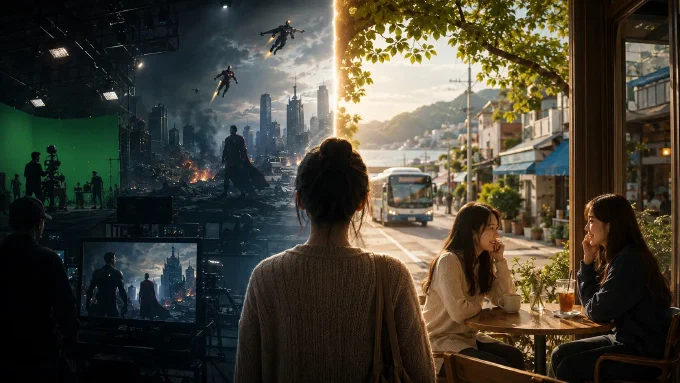
For years, Hollywood seemed to believe that the future of entertainment was obvious.
Movies would become bigger. Visual effects would become more impressive. Superhero franchises would connect everything into one enormous universe. Green screens and digital environments would allow filmmakers to create places that could never exist in real life.
For a while, audiences loved it.
Then something strange happened.
The technology kept improving, but the fascination with it started to disappear.
Today, viewers can spend hours on YouTube watching AI-generated videos, artificial voices, synthetic images, digitally created characters and endless visual effects. Hollywood is competing for attention in an environment where the internet itself has become a gigantic special-effects machine.
And that may be one reason why something much simpler has become attractive again:
Reality.
A real street. A real apartment. A real bus. Two actors sitting across from each other and having a conversation.
It sounds almost absurdly basic.
But after years of increasingly artificial entertainment, basic can feel surprisingly fresh.
The problem with making everything bigger
There was a period when CGI genuinely felt magical.
Seeing a convincing digital creature, an enormous science-fiction city or a superhero flying through a realistic environment could be enough to sell an audience on a movie.
The technology itself was part of the attraction.
The same thing happened with superhero films. A character who previously existed mainly in comic books could suddenly appear on a huge screen, surrounded by spectacular action and visual effects.
Audiences wanted to see what was possible.
Hollywood responded by giving them more.
And then more again.
Eventually, however, “more” stopped meaning “better.”
A giant digital battle is still a giant digital battle. Another superhero destroying another digital city doesn’t necessarily feel more impressive just because the rendering is technically better.
The novelty wears off.
This is especially noticeable when a production becomes so dependent on digital environments that the physical world almost disappears from the picture.
The green-screen problem
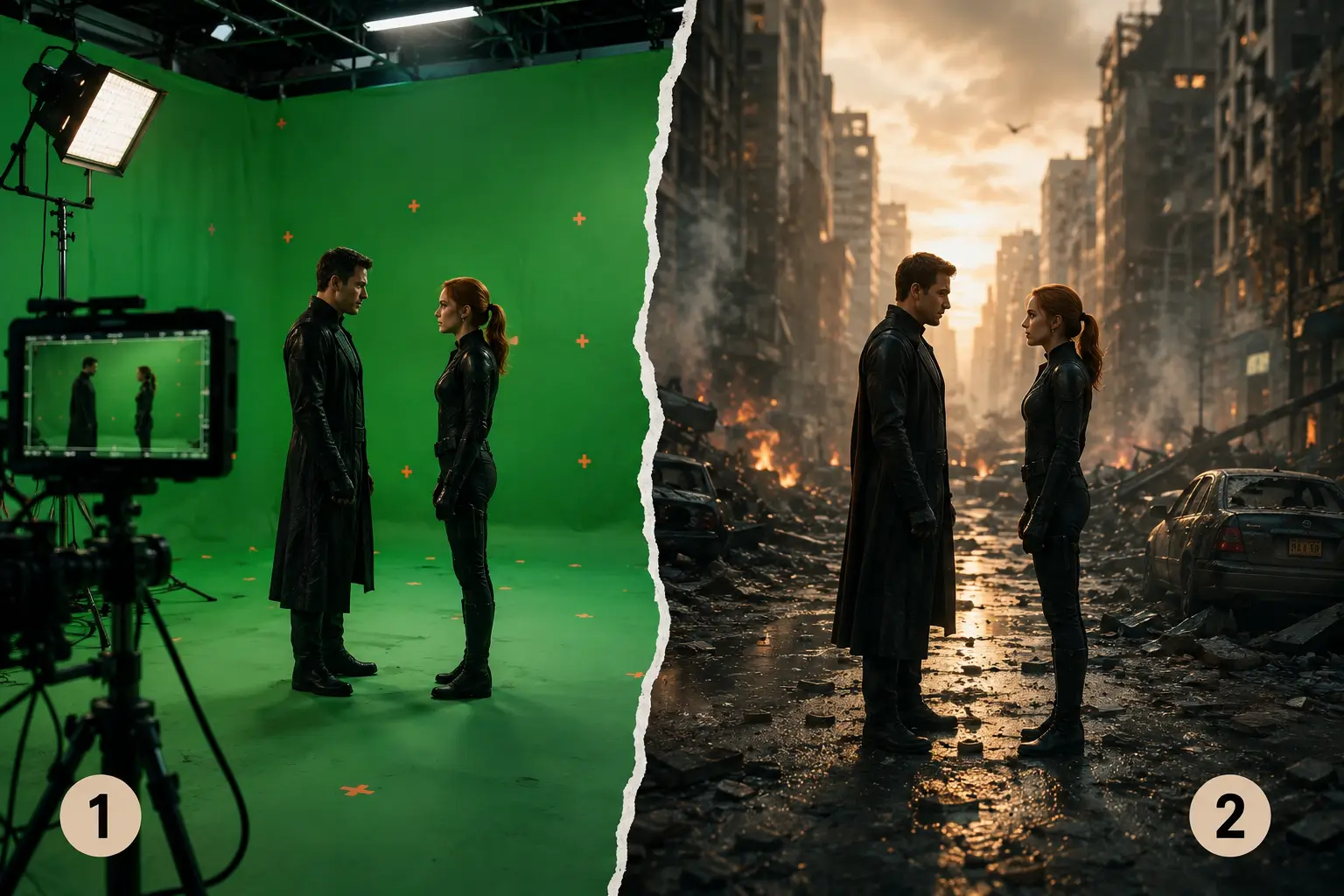
There is nothing inherently wrong with green screens or CGI.
They are extraordinary filmmaking tools. Some stories simply cannot be made without them.
The problem begins when the audience starts feeling that the actors themselves are disconnected from the world around them.
A character is supposedly standing in a busy city, but the background looks artificial.
A vehicle is moving through a landscape, but everything outside the windows is digital.
A group of characters is having an emotional conversation, but the environment looks like a video-game level.
Even when the effects are technically impressive, something can feel strangely empty.
This is not necessarily because viewers can identify the exact visual effect that was used. Most people aren’t sitting there thinking about compositing, virtual production or digital matte painting.
They simply feel that something isn’t quite real.
And that matters because filmmaking isn’t only about showing something believable. It is also about making the audience feel that the characters are actually somewhere.
A real location provides thousands of tiny details that are difficult to reproduce artificially: imperfect lighting, background noise, weather, texture, random people, awkward spaces and the natural way actors physically interact with their surroundings.
The camera doesn’t have to tell you that the world is real.
You can feel it.
The timing may be particularly unfortunate for Hollywood
There is an interesting irony here.
Before 2020, entertainment could provide an escape from everyday life. Going to cinemas, concerts, restaurants and other public places was part of the experience.
Then the pandemic changed our relationship with screens.
For a while, work, school, social interaction and entertainment all happened through the same device.
At roughly the same time, the internet became flooded with increasingly synthetic content. AI voices, generated images, artificial environments and cheap visual effects became available to almost anyone.
The technology that once made Hollywood special became part of the background noise of the internet.
Hollywood keeps selling spectacle at precisely the moment when people are surrounded by it.
Perhaps what viewers increasingly want isn’t another artificial world.
Perhaps they want something that feels human.
This is where Asian dramas become interesting
Korean dramas have benefited from this shift, although not necessarily because they consciously designed their industry around it.
One of their strengths has traditionally been the use of real locations.
A character gets on an actual bus.
They walk down an actual street.
They sit inside an actual restaurant.
They enter an actual apartment.
The production may still be highly polished, but the world often feels physically present.
A beautiful real location doesn’t need to be explained. Architecture, weather, traffic and background activity automatically give a scene a sense of place.
Korean dramas are also particularly good at turning ordinary places into part of the fantasy. A café can become memorable. An apartment can become associated with a character. A street can become part of a relationship.
As I argued in my earlier article about the rise of easy viewing, Asian dramas also tend to put considerable emphasis on relationships, friendship, family and emotional connection rather than constantly escalating the external threat.
That combination is powerful:
real places + attractive cinematography + human relationships.
It doesn’t require the world to explode every twenty minutes.
But then the same cycle starts again
This is where the whole thing becomes almost comical.
A smaller entertainment industry discovers that audiences like its more intimate, physical style.
Demand increases.
Budgets grow.
Productions become more elaborate.
Studios look for greater efficiency, larger sets and increasingly sophisticated digital tools.
Eventually, the industry starts moving toward the exact production model that made the bigger industry feel artificial in the first place.
You can almost draw the cycle:
Real locations → popularity → higher demand → bigger productions → digital environments → less physical reality.
Hollywood went through it.
Korean entertainment is increasingly dealing with it.
And Thailand is becoming an interesting counterexample.
Perfect Crown (2026) is a good warning: CGI turned up to eleven, and one of the year’s biggest disappointments for me.
Meanwhile, dramas like Sapai Import (2020), Affair (2024), Pluto (2024) and Stepmother (2025) show how much you can do with real places, small-scale production and people simply interacting.
Why Thai dramas feel surprisingly fresh

Thai dramas are particularly interesting because many still have a feeling of physical intimacy.
The productions do not always look enormous. The actors may not be international stars. The locations can be ordinary.
Those limitations can become part of the appeal.
A real house with interesting architecture can be more memorable than an expensive digital mansion.
A real café can feel more inviting than an enormous CGI environment.
And actors who have developed genuine chemistry can make a simple conversation more interesting than an expensive action sequence.
This is particularly noticeable in Thai romantic and GL dramas.
Some series have a basic premise, a small cast, a handful of locations and a relationship at the center of everything.
Yet viewers become invested.
Why?
Because the attraction isn’t necessarily the plot.
It is watching two people interact.
That is something CGI cannot manufacture by itself.
Thai GL makes the point especially clearly. Some series that look extremely niche on paper have developed dedicated audiences not because their stories are revolutionary, but because viewers become invested in the characters’ chemistry and relationship.
The production is selling something Hollywood cannot simply buy with a bigger budget:
connection.
And connection is much harder to replace with technology.
You can see the same thing outside television
This isn’t limited to dramas.
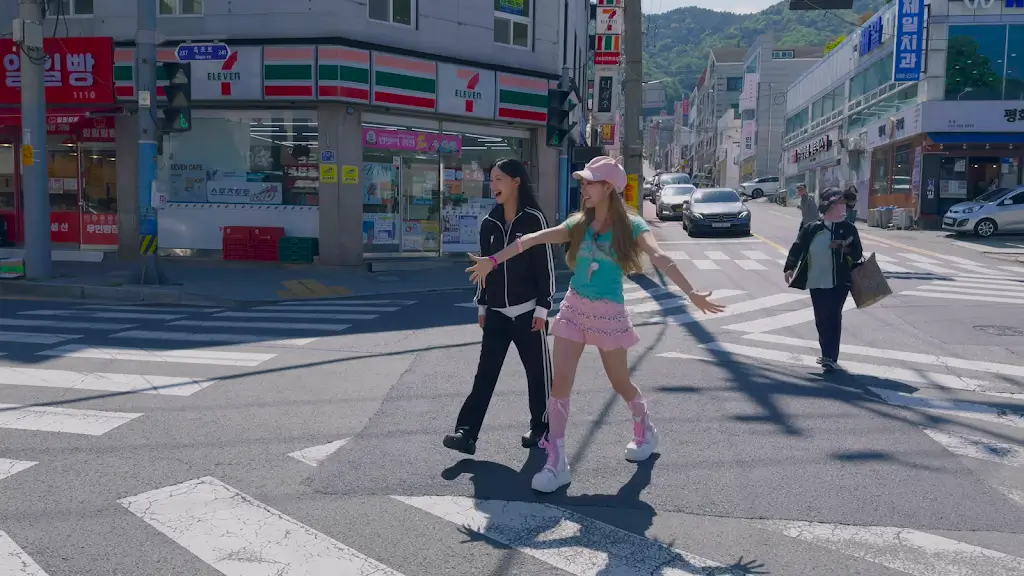
A surprisingly good example is the Korean girl group RESCENE. The group became much more widely known in 2026 after member Woni started a personal YouTube channel built around a very different kind of idol content.
One of the biggest videos, I Brought a Gal to Geoje, ENG subtitles , takes Woni and Japanese member Minami to Woni’s hometown of Geoje. The concept sounds almost too simple: put two entertaining people in a real place and let them interact with it.
But that simplicity became the attraction.
The video uses real locations, local people and Woni’s connection to the town. Minami’s exaggerated gyaru character creates the comedy, while Woni can naturally introduce the place because it is her hometown.
There is obviously a structure behind the videos. They are planned rather than completely spontaneous.
But the important part is that the people are doing the work.
The audience isn’t watching an enormous fictional world being generated around them. They are watching recognizable personalities move through a real environment, talk to actual people and react to things that exist outside the studio.
The environment is real. The personalities are the entertainment.
That is remarkably close to the appeal of a good romantic drama.
We are entering the age of AI at exactly the wrong time for artificial entertainment
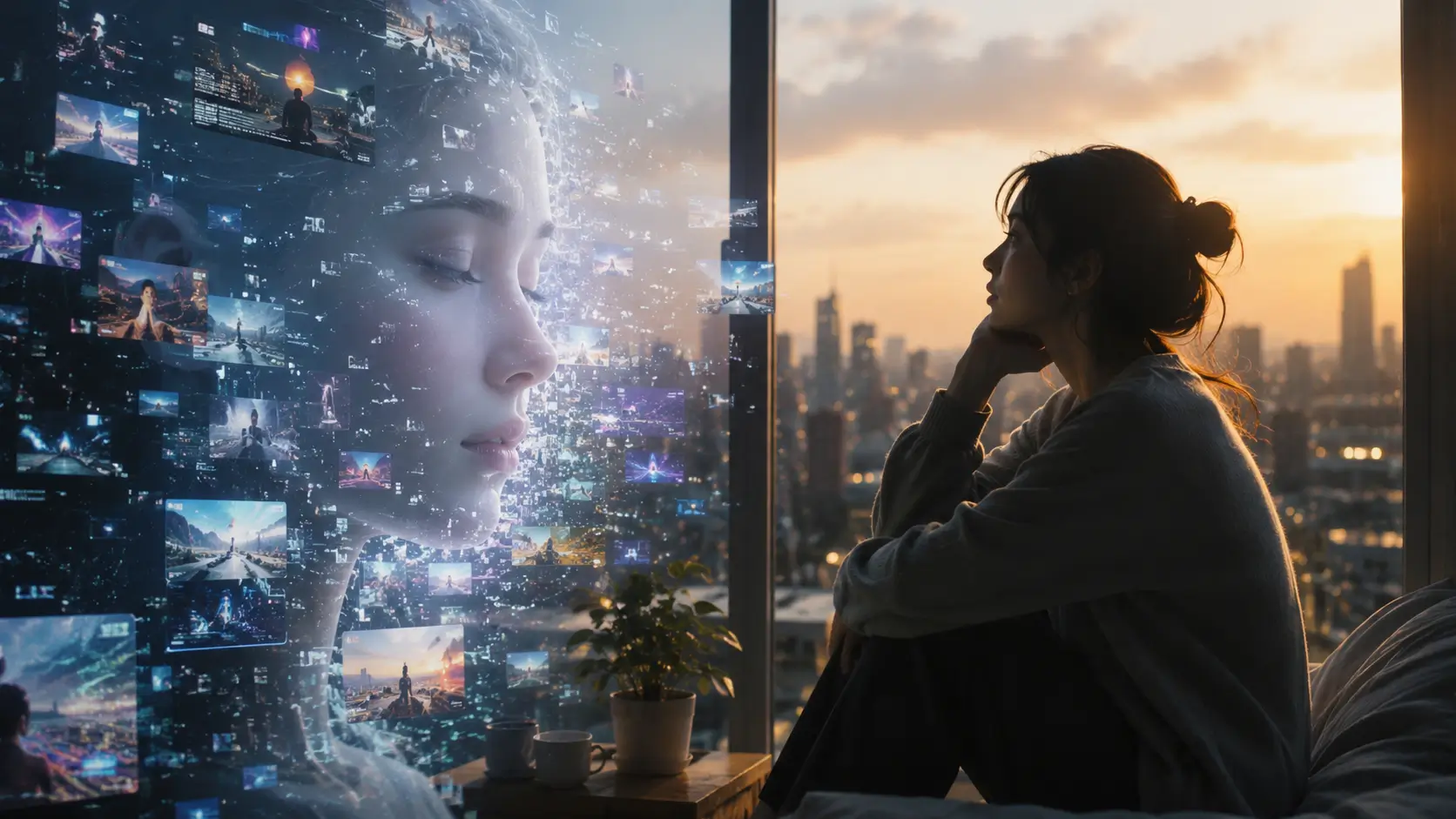
There is another layer to this.
AI is making synthetic entertainment dramatically easier to produce.
A person who couldn’t previously create a convincing image, voice or video can now generate one with a prompt.
That is an extraordinary technological achievement.
But there is an obvious side effect:
synthetic content is becoming cheap and abundant.
When something is rare, it feels special.
When something is everywhere, it becomes background noise.
This could create an unexpected premium on things that AI cannot easily make audiences genuinely believe:
real people, real locations, real chemistry, real performances and real imperfections.
The future of entertainment may not be about making everything look more artificial.
It may be about making artificial entertainment so abundant that reality itself becomes the luxury product.
Even the World Cup accidentally proved this
The 2026 FIFA World Cup gave millions of people a surprisingly different image of the United States.
For years, Hollywood had shown America through CGI, studio warehouses and carefully constructed sets. Then suddenly, YouTube Shorts and fan videos were full of something much more interesting: real malls, suburban streets, restaurants, highways and ordinary neighborhoods filled with football fans.
Ironically, some of the most fascinating images of America weren’t movies at all. They were simply people walking through real places with a phone camera.
Spectacle doesn’t survive the trip home
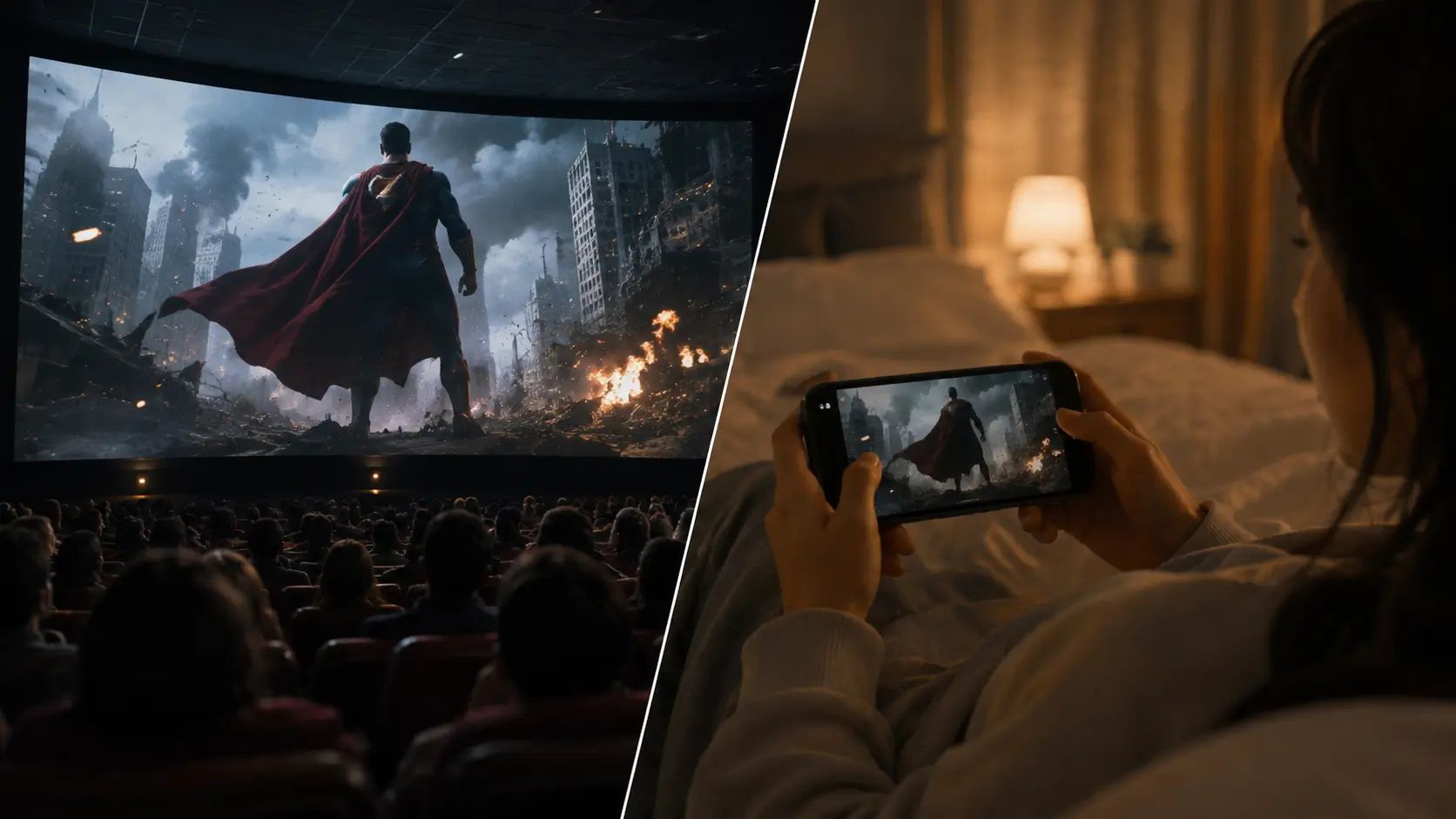
There is another problem Hollywood may have underestimated:
where people are watching its movies.
A superhero movie can still be incredible in a cinema.
A huge screen, powerful sound system, darkness and a crowd reacting around you can make an enormous CGI sequence genuinely impressive.
Now watch the same movie on a phone while sitting on a bed.
The explosion is smaller. The sound is weaker. Visual details disappear. Notifications compete for attention. You can pause the movie, open YouTube or TikTok, or answer a message.
The spectacle loses some of its power.
Hollywood’s most expensive productions are often designed as maximum-impact experiences, but audiences increasingly consume entertainment in environments that are almost the opposite of that.
A quiet conversation between two interesting characters doesn’t have the same problem.
You can watch it on a phone.
You can watch it while eating.
You can watch it in bed.
You don’t need a giant screen for chemistry between two actors to work.
This may help explain why relationship-driven dramas have an advantage in the streaming era. Their most important special effect isn’t the size of the image.
It is whether you care about the people in it.
Hollywood can still make spectacular movies worth seeing in a cinema. The problem is that a growing amount of entertainment is no longer being consumed there.
When spectacle is removed from the environment it was designed for, its weaknesses become much easier to see.
The housing problem makes this even stranger
There is an even stranger possibility.
For many people, ordinary physical social life has become harder. Housing is expensive. Work is increasingly digital. Social interaction happens through phones, while dating increasingly happens through applications.
People can be surrounded by communication while experiencing less physical connection.
Then they turn on a drama and watch two fictional people simply spend time together.
They walk somewhere.
They eat together.
They argue.
They sit in a car.
They visit someone’s house.
They fall in love.
Maybe part of the appeal isn’t escapism at all.
Maybe it is watching something increasingly valuable in real life:
people simply being together.
Hollywood’s problem isn’t technology. It’s overexposure
Hollywood doesn’t need to abandon CGI, superheroes or giant productions.
The problem is that the industry has spent years treating bigger as a substitute for more interesting.
Superhero films solved a real problem. They gave studios recognizable characters, enormous spectacle and the possibility of building franchises that audiences would return to again and again.
For a while, it worked brilliantly.
But a successful formula eventually becomes an industrial habit.
Every studio wants its own universe. Every character becomes potential intellectual property. Every sequel has to be larger than the previous one. Every climax has to justify the budget.
Eventually, the audience stops asking “How did they make this?” and starts asking “Why should I care?”
That is the real danger.
A perfectly rendered digital city is still just a setting. A spectacular battle is still just an action sequence.
Technology can make a scene bigger.
It cannot automatically make it meaningful.
And this is where the comparison with Korean and Thai dramas becomes interesting.
Smaller productions often have limitations that Hollywood would normally consider problems: fewer locations, smaller casts, less spectacle and tighter budgets.
Yet those limitations can force the production to concentrate on things technology cannot easily replace.
Characters. Chemistry. Atmosphere. Place.
Success creates an interesting paradox. Once a smaller industry becomes popular, it naturally starts scaling up. Budgets grow, productions become more elaborate and digital tools become more attractive.
In other words:
the thing that made the industry interesting can disappear precisely because the industry succeeded.
That may be the most important lesson here.
The new luxury may be reality
The entertainment industry is entering an unusual period.
AI is making synthetic images, voices and videos increasingly cheap. Social media already provides an endless supply of visual stimulation. Hollywood can create almost any environment imaginable.
So artificiality is no longer rare.
It is everywhere.
That could make reality more valuable, not less.
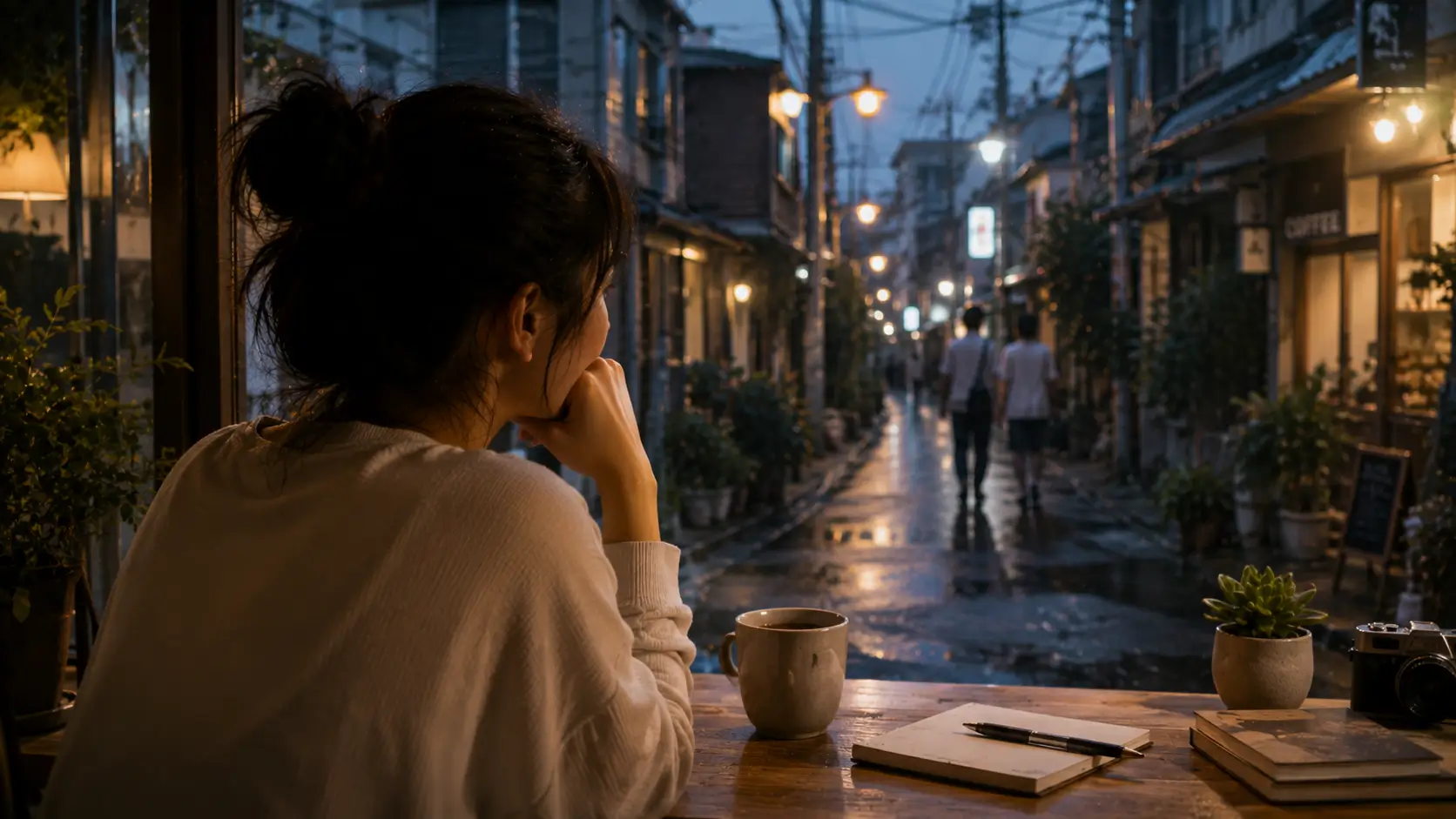
A real street.
A real apartment.
A real café.
Two actors who actually have chemistry.
A performer visiting their hometown and interacting with real people.
A story that doesn’t need to destroy the world to keep you watching.
These things sound almost too ordinary to be revolutionary.
But perhaps that is exactly why they work.
Hollywood spent decades making the impossible look real.
Now the internet is making the artificial look ordinary.
The competitive advantage may be moving in the opposite direction.
When everyone can manufacture spectacle, authenticity becomes the spectacle.
That doesn’t mean audiences are finished with Hollywood. They aren’t finished with superheroes, CGI or big movies either.
They may simply be becoming harder to impress with size alone.
And that leaves Hollywood with a rather uncomfortable challenge:
It can build almost any world it wants.
But if audiences don’t care about the people inside it, what was the point of building the world in the first place?
Maybe the future of entertainment won’t belong to whoever can create the biggest artificial universe.
Maybe it will belong to whoever can make a fictional world feel human.
And after years of trying to escape reality, that might be the most interesting thing Hollywood could rediscover.